-
Migration
Migration
Wild geese have an innate instinct to migrate. Once when I was watching a flock of geese fly overhead I thought that their instinct was like God’s instinct to bond with human beings, but I caught myself, thinking it was disrespectful to compare our
God to a flock of geese.Then I read this from St. Augustine: “Your love must migrate: cast of your moorings from creatures, moor yourself to the Creator. Change your love, change your fear; the only things that make good or bad lives are good or bad loves.”(sermon no. 313A)
If the geese reminded me of our God, it must have been His very intention that they should, and perhaps I could take a lesson from the geese about a heart that migrates from the things of the world, to the things of God: Jesus answered, “Everyone who drinks this water (from a well) will be thirsty again, but whoever drinks the water that I give them will never thirst. Indeed, the water I give them will become in them a spring of water welling up to eternal life.” (John 4:13-14) The astonishing gift of eternal life is the love gift of a bridegroom to His bride. It came from the heart of Jesus to the woman he met at a well. It was his to give, for it was the very reason he was born, so that all of our hearts could migrate to his Father’s heart.
The geese that fly in such beautiful precision don’t know why they come or go, but respond to earthly signals of temperature or length of daylight to gather and make their flights. But God has sent His Holy Spirit that we might recognize and respond to the very Creator of both the geese and ourselves, that our hearts might be able to migrate and to love an invisible God: “God so loved the world that He gave His only begotten son, that whosoever believed in him should not perish, but have everlasting life.” (John 3:16)
This is how we know that we live in Him, and He in us: He has given us of His Spirit. . . and so we know and rely on the love God has for us. God is love. There is no fear in love, but perfect love drives out fear. (1 John 4:13-18)
The geese are beautiful and I delight in seeing them in the spring and again in the fall. For thousands of years they have signaled the changing seasons, entirely without human direction. Most people have seen them with awe and pleasure, and some are reminded of our common Creator. I believe that God intends every part of nature to carry His signature, to help our love migrate to Him.
Love in Him,
Prue
-
Mary
One year on the night before Christmas eve, my mother-in-law fell and broke her leg. She was alone in her apartment until a friend wondered why she hadn’t come to breakfast in the morning and tried unsuccessfully to visit her. The friend called the fire department, whose men quickly arrived and broke her lock and took her to the E.R. where she waited to have her leg set by a surgeon.
Jack and I arrived on Christmas eve and went to the surgical waiting room. Quite soon a young woman came out of the surgery and smiling, said, “Don’t worry, your mother is in very good hands, and I will be here to answer any of your questions.” When she started to return to the surgery, she turned and said, “My name is Mary. You may ask for me at any time.”
To this day I believe that Mary probably doesn’t remember that Christmas eve at all, but I will never forget it, for I felt overwhelmingly that we were experiencing a real reminder of Christmas right there in the hospital, a reminder given to us in the person of Mary, who happened to be on duty on Christmas eve.
St. Augustine wrote, “The male sex is honored in the flesh of Christ; the female is honored in the mother of Christ. (sermon no. 190) the “honor” that Augustine mentions comes from God , who chose Mary and Joseph to be the parents of His son. Augustine saw in Mary a woman honored by God. I believe that the notion that Mary was honored by God was a powerful influence in the cultures of the world that accepted it. It was an affirmation of the value of women in the eyes of God, a theme that gradually improved the lot of women from being the legal property of men to being persons in themselves.
When Jesus was confronted by the teachers and Pharisees about a woman caught in adultery , a crime punishable by death to the woman, he simply said, “ Let any of you (men) without sin be the first to throw a stone at her.” At this those who heard began to go away . . . until only Jesus was left. . . “Woman, where are they?Has no one condemned you?” “No one, Sir,” she said. “Then neither do I condemn you,” Jesus declared. (John 8:7-11)
Mary, Jesus’ mother, said, From now on all generations will call me blessed. (Luke 1:48) That night in the hospital we were blessed by a young woman named Mary, but I believe all women and men have been blessed by the young woman named Mary who said “yes” to God.
Love in Him,
Prue
-
More Important
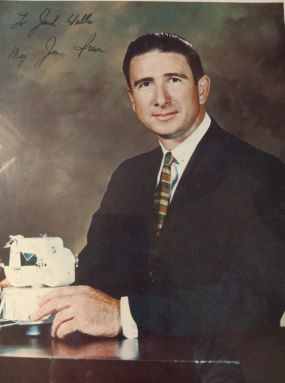
Astronaut James Irwin was the eighth man to walk on the moon in 1971. He was famous for this and for his remark, “Jesus walking on the earth was more important than man walking on the moon.” He was one of very few who could have made such an assertion with authenticity.
I believe that every soul can find a “ Jesus more important” statement for his or her own life. What difference has it made that Jesus has walked on the earth? It has given every Christian a second home in a church community and a resource by which each one can receive the forgiveness that ushers us into the Kingdom of our God. Jesus walking the earth has given us an assurance of life after death: “I am the resurrection and the life. The ones who believe in me will live, even though they die. (John 11:25)
The achievement of Apollo 15 was was a wonderful one for the whole world. It sparked imagination for children and adults alike. It was an inspiration and a hard-won victory after much planning, research, trial and error; and many resources were spent upon the project. James Irwin himself had wanted to walk on the moon since he was ten years old. He had told his mother that he would be the first to do it. The man who walked on the same moon that Jesus saw when he looked at the night sky, had thoughts only of Jesus when he saw earth from the moon, and he knew that Jesus’ walk was more important than His.
Love in Him, Prue
-
Reading Aloud
Abraham Lincoln always read aloud to himself, and sometimes I read aloud to myself. In the Bible a very important moment is facilitated by a man reading aloud to himself while sitting in a chariot. The incident was both natural and supernatural: Now an angel of the Lord said to Philip, “Go south. . . from Jerusalem to Gaza. So he started out and on his way he met an Ethiopian, an important official in charge of the treasury of the queen of Ethiopia. . . Then Philip ran up to the chariot and heard the man reading aloud from Isaiah the prophet. “Do you understand what you are reading?” Philip asked. “How can I,” he said, “unless someone explains it to me?” So he invited Philip to come up and sit with him. (Acts 26-31)
Of all the post resurrection events, this is one of the most appealing. Two men from different nations sat in a chariot and talked about God and His son. One of the two was responding to the angel’s instructions and the other received Jesus as his savior and was baptized. The angel was necessary for Philip’s errand, but the Ethiopian’s reading of the scripture aloud was also necessary for Philip to know and do his errand. It seems that God intends His people to participate with angels in the work of salvation, and nowhere is it more vividly displayed than on this road from Jerusalem to Gaza, between two men who would probably never see each other again, but whose lives had both been changed.
Enabling the natural and the supernatural to work together is a gift of the Holy Spirit. It can be seen in the Old as well as the New testament. The story of the Exodus combines the natural and the supernatural, both in God’s hands. In the New Testament, the story of Jesus’ feeding of the five thousand from one boy’s lunch is the combination of the natural and the supernatural. When this is evident the effect is lasting, for, as with Philip and the Ethiopian, the supernatural hand holds the natural hand to reveal the Savior who is also our creator God of nature.
Around the year 387, St. Augustine’s conversion occurred when he heard a child’s voice on the other side of a wall singing, “Take up and read. Take up and read.” Augustine took up the book of Romans and was converted: How sweet it suddenly became to be free of the sweets of folly. Things that I once feared to lose it was now my joy to put away. . . You, the true and highest sweetness, you cast them forth, and in their stead you entered in, sweeter than every pleasure. (Confessions 9,1)
I sometimes wonder if anyone can overhear me reading scripture aloud to myself, and then I know, of course, Someone always hears.
Love in Him,
Prue
-
The Heart of God
The Heart of God
God spoke to Abraham. He spoke to Jacob, to Moses, among others, and to a young boy named Samuel, who had to be introduced before he could know that it was God
who was calling him: Then Eli perceived that the Lord was calling the boy. So Eli told Samuel, “Go and lie down, and if He calls you, say, ‘Speak, Lord, for your servant is listening.’” So Samuel went and lay down in his place. The Lord came and stood there calling as at other times, ‘Samuel! Samuel!’ Then Samuel said, ‘Speak, for your servant is listening.’” (1 Samuel 3:9-10)
This brief moment, facilitated by Eli, is a seminal moment in the very history of salvation, as vital as Moses’ burning bush. For here the child Samuel unknowingly becomes God’s spokesperson and leader of Israel. He will move a nation in which: The Word of the Lord was rare. There were not many visions. ( 1 Samuel 3:1) This obscure child in Israel, Hannah’s son, would grow to anoint two of Israel’s greatest kings, Saul and David, to keep the nation faithful to the God who was remaining faithful to them.
God entered Samuel’s life in the gentlest possible way. God waited until nightfall and enlisted Eli’s knowledge of Him, to call the boy. God made no demands upon Samuel, as He had of Moses, but His call let the boy know that God exists, is real, and seeking to share His life and character with Samuel. The lonely boy had been found by the One who would befriend him for life. The message God gave to Samuel concerning Eli’s sons must have been frightening until in the morning when Eli accepted it.
From then on, Israel remembered that they were not alone, that their God had given them a voice and a mouthpiece: The Lord continued to appear at Shiloh, and there He revealed Himself to Samuel through His word, and when Samuel spoke, all Israel listened. (1 Samuel3:21) The dry time of few visions and rare words was finally over, and Samuel’s ministry renewed the nation’s devotion to their God at the time in their history when the monarchy was born. It was Samuel who spoke the message of a future king after Saul : The Lord has sought out a man after His own heart and appointed him ruler of His people. ( 1Samuel 13:14)
God’s heart was touched by the heart of Hannah, and she gave her child Samuel to God to be His prophet. Better than anyone else of his time, Samuel knew the heart of God when he anointed David.
Love in Him,
Prue
-
Susa Was Perplexed
The story of Esther in the Bible is a story of perplexities unscrambled as an unexpected savior emerged. Nothing about the orphan girl Esther suggested that she would save her people from annihilation in a pagan country to which they had been exiled. While it’s true that she was exceptionally pretty, there were many beautiful girls rounded up to please King Xerxes and to replace his disobedient queen.
At first neither Esther nor Mordecai, her uncle, perceived any advantage for Esther in having been chosen to be queen. Esther hid from the king her relationship to Mordecai . Everything in their new environment was strange, so strange that, though they were faithful to their God, they never spoke of Him to each other, even in a life and death crisis.
Esther never thought of herself as a savior. In fact, she remained ignorant of the cataclysmic plan of Haman, the prime minister, to exterminate the entire Jewish population living in Babylon, until Mordecai made it known to her. When she finally understood the crisis, Esther drew on her faith in God and what she knew of the rituals of her people: Go, gather together all the Jews who are in Susa, and fast for me. Do not eat or drink for three days, night or day. I and my attendants will fast as you do. When this is done, I will go to the king. . . and if I perish, I perish. (Esther 4:6)
Esther risked her life in appearing before the king unannounced and uninvited, but her action won Xerxes’ full support. With the help of her uncle, Esther made a plan to reverse Haman’s actions against the Jews, and the relief was felt throughout the kingdom. Where chaos had reigned in the city of Susa, a peace settled into God’s people.
From one perplexity to another, Esther moved to stay loyal to her family and her people: For how can I bear to see the destruction of my people? How can I bear to see the destruction of my family? (Esther 8:6) Though His name is never mentioned in Esther’s story, the Spirit of God lives in Esther such that His will and His providence is richly displayed, as one perplexity after another falls to the soul who offers herself for the survival of her people. Esther is a foreshadow of another Savior whose sacrifice for his people will reach and rescue Jew and Gentile alike beyond the limits of time or place.
Love in Him,
Prue
-
Greater Than Jonah
The men of Nineveh will stand up at the judgment with this generation and condemn it, for they repented at the preaching of Jonah; and now something greater than Jonah is here. Luke 11:32)
More than once in the Bible Jesus calls upon the story of Jonah to explain his own relationship to God’s people. In come ways Jesus is very different from Jonah, but in the most vital sense, Jesus finds in Jonah a picture of himself in his most important work of preaching, dying, and being raised.
First, Jonah tried to avoid God’s call to him by running away on a ship to Tarshish, (Jonah 1:3), but Jonah was enough of a true prophet to understand both the storm at sea, and the necessary solution of his being thrown into the raging water. Jonah had resisted God’s call because he was convinced that the Ninevites would harm him and certainly not listen to him. When they finally heard Jonah and in fact did repent , Jonah was angry with God for putting him through the ordeal and not destroying the city, as he had warned would happen. Jonah failed to understand what God knew about the Ninevites:
that the collective consciences of the city were still alive, that the people, though not among the chosen people of Israel, were still capable of recognizing their own sin, and even of repenting at the word of a ragged prophet from Israel. This is the key to Jesus’ identifying with Jonah. Jesus saw that the people who should be able to recognize him, didn’t, but that his ministry was greater even than Jonah’s, and would bring to repentance countless more souls over the millennia ahead.
The echo of Jonah shows up in Mark 4:37: A furious squall came up, and the waves broke over the boat so that it was nearly swamped. Jesus was in the stern, sleeping on a cushion. The disciples woke him and said, “Teacher, don’t you care if we drown?” He got up, rebuked the wind and said to the waves, “Quiet! Be still!” The wind died down and it became calm. They asked each other, “Who is this? Even the wind and waves obey him!” The wind and waves obeyed Jonah, too, but now there was someone far greater than Jonah in the boat. He, like Jonah, would offer his own life, and the repentance that would be possible after his resurrection would reach around the world to countless generations. Jonah’s life was a prefigure of Christ, and Jesus is our living Savior.
Love in Him,
Prue
-
Get Real
Nancy, my older sister, had bright red hair. She taught second grade for several years and loved being in the classroom. One October day her principal brought a red headed boy to her class and handed Nancy his folder. He had been transferred from another class in the same school. In fact, he had been transferred twice based on “personality conflict” with the teacher. Nancy had to accept him, and placed his desk adjacent to her own.
By November it was time for parent/teacher conferences, and this boy’s mother arrived for hers. Nancy showed the mother all of her son’s work, and after a moment, the mom looked at Nancy and said, “Yes, but how is he really doing in class?” Nancy said later that she thought she could be “real,” so she said, “How do you think a red-haired boy would do in my class??” There were tears in this mother’s eyes when she left the interview. The boy had a good year that year, and stopped back to see Nancy after he went on to third grade.
Nancy was unapologetic about her preference for this boy. She thought that probably some of the other children believed that he was her son, but no one complained about his being favored. It must have been such a surprise to him, that he just accepted his new status and enjoyed it.
To get real,” is to find Grace.
Conversion:
He was a born loser,
accident prone, too;
never won a lottery,
married a girl who
couldn’t cook, broke
his leg the day before
the wedding
and forgot the ring.
He was the kind
who ended up behind a post
in almost any
auditorium. Planes
he was booked to fly on
were delayed
by engine trouble
with sickening regularity.
His holidays at the beach
were almost always ruined by rain. All
his apples turned out wormy. His letters
came back marked
Moved, left no
address. And it was
his car that was cited
for speeding
from among a flock of others
going 60 in a
55 mile zone.
So it was a real shocker
when he found himself
elected, chosen by Grace
for salvation, felt
the exhilaration of
an undeserved and wholly
unexpected joy
and tasted, for the
first time, the Glory
of being on
the winning side.
By Luci Shaw
Therefore, there is now no condemnation for those who are in Christ Jesus, because through Christ Jesus the law of the Spirit who gives life has set you free. . . (Romans 8:1-2)
Love in Him,
Prue
-
Open Wide Your Hearts
We have spoken freely to you, Corinthians, and opened wide our hearts to you. We are not withholding our affection from you, but you are withholding yours from us. As a fair exchange—I speak as to my children—open wide your hearts also. (2 Corinthians 6:11-13) These are the words of St. Paul , who founded a church in Corinth, but they could have been the words of Jesus himself to his own people and to us. In our hearts are many chambers, and only a few do we open at a time. Wonderfully, our God actually knows the contents of every single chamber, even the ones we hide from ourselves : Even the hairs on your head have been counted. ( Luke 12:7)
When Paul wrote “Open wide your hearts,” he prefaced it with his own openness to the people of Corinth. When God sought His people to free them from Egypt, Moses first asked, “What can I tell them is your name?” “Say to them, ‘The Lord, the God of our fathers—the God of Abraham, Isaac, and Jacob—appeared to me and said, ‘I have watched over you and have seen what has been done to you in Egypt.‘” (Exodus 2”16)
Before engaging with His people God has let them know who He is. He has spoken freely to them, and this begins His journey to make them a nation capable of opening themselves to Him. It was a long hard journey.
By now God has opened many more windows into His own character, and has found many beside Paul who have opened wide their hearts to Him. Even before Paul, David wrote, The Lord is My shepherd. . .surely goodness and mercy shall follow me all the days of my life, and I shall dwell in the house of the Lord forever. (Psalm 23)
David opened wide his heart to God, as have many others. Jesus opened wide his heart to both God and mankind, in order that we might be reunited with God.
The things that keep some hearts tightly closed are mostly fear in the world, and a feeling of futility in opening our hearts to God. Paul demonstrated that it can be done; God demonstrated that it must be done, and we remain afraid. Jesus said, Fear not, little flock; it is the Father’s good pleasure to give you the Kingdom. (Luke 12:32) It is a blessed journey to open our hearts to Him through scripture reading and prayer. His character is love. He shares His character with us even when we don’t love Him. The apostle John wrote, We love because He first loved us. (1 John 4:19)
Paul was looking for that love in the Corinthians, and God is looking for that love in us.
Love in Him,
Prue
-
Cardinals
The cardinals that built a nest in the shrub outside my front door have flown away. I was fascinated with them for the duration of their stay. They persevered when we had the shrubs pruned and even after I discovered the nest and wanted to visit it every hour, but limited myself to twice a day. They had four little ones and now at least one of those is returning to our feeders. I learned that after they leave the nest, the mother bird leaves to start another nest, but the father stays close and continues to feed them occasionally. One of the young ones now inhabits our hedge, and the father does come to visit it and sometimes to feed it. I feel as if these cardinals are almost my own family, but they don’t return the feeling. They live in a different world from mine, and I understand only a fraction of their world.
Yet, we have one thing in common: Are not five sparrows sold for two pennies? Yet not one of them is forgotten by God. Indeed, the very hairs of your head are all numbered. Don’t be afraid. You are worth more than many sparrows (cardinals?)(Luke 12; 6&7) We are both God’s creation, and Jesus reminds us to take comfort in our place in the natural world, a place of importance to God.
The lives and activities of the birds are fascinating, especially because so much of them are hidden. We might see a flash of red at the birdbath, or in the trees, but keeping track of their whereabouts and their activities is difficult, as if they live in a world within a world. Their beauty makes them irresistible reminders of God’s creation, of His beauty and His sharing it with us. C.S. Lewis once wrote, But for our body, one whole realm of God’s glory would go unpraised, for the beasts can’t appreciate it. . . I fancy that the ‘beauties of nature’ are a secret God has shared with us alone. That may be one of the reasons we were made—and why the resurrection of the body is an important doctrine.
(C.S. Lewis, Images of His World) Jesus knew of our love of beauty in the natural world. He knew, too, that we share this love with his Father.
Cardinals have flown in earth’s skies for at least hundreds, if not thousands of years, spreading delight in their color and song, to any who claimed the moment to look and listen. They are one more small bond between God and His people.
Love in Him,
Prue
-
Subscribe
Subscribed
Have a WordPress.com account? Log in now.

